
The 5 Best-Selling Garmin Forerunner Watches Reviewed in 2026
Choosing the right GPS running watch can feel like a marathon before you even start training. Garmin’s Forerunner series dominates the running world, but with dozens of models, how do you pick the one that fits your training, goals, and budget? This comprehensive guide cuts through the noise. We’ve reviewed the top five best-selling Garmin Forerunner watches from the entry-level hero to the premium triathlon beast to break down their core features, price points, and who exactly should buy each model in 2026.
What Watch For Which Runner?
Here is a quick summary of our findings the Garmin Forerunner watch recommended based on your specific needs:
| User Type | Recommended Model | Key Reason |
| The Elite Choice | Garmin Forerunner 965 | Best data, mapping, and a stunning AMOLED screen. |
| The Runner’s Favourite | Garmin Forerunner 265 | Perfect blend of modern screen and advanced training metrics. |
| The Ultra-Long Life Champion | Garmin Forerunner 255 | Incredible GPS tracking battery life at a mid-range price. |
| Budget AMOLED King | Garmin Forerunner 165 | Affordable watch with the essential AMOLED display. |
| The Runner’s Starter Pack | Garmin Forerunner 55 | Simple, reliable, and cheapest entry into the Garmin ecosystem. |
Table of Contents
NOW What is the Garmin Forerunner Series?
The Garmin Forerunner is Garmin’s dedicated line of running watches, built specifically for runners and multisport athletes. Unlike the adventure-focused Fenix or Venu series, Garmin Forerunner running watches from the entry-level Forerunner 55 to the premium Forerunner 965 prioritize lightweight design, advanced running metrics, industry-leading GPS accuracy, and superb battery life. These Forerunner watches integrate seamlessly with the powerful Garmin Connect app, turning raw data into actionable insights on recovery, training load, and performance prediction.
Product Deep Dive: The Top 5 Models
Garmin Forerunner 965: The Elite Choice
The 965 is the flagship watch built for triathletes, ultra-runners, and data-obsessed athletes who demand the best. It combines all of Garmin’s most advanced training features with a striking, premium build.
- Features: Brilliant 1.4-inch AMOLED touchscreen, lightweight titanium bezel, multi-band GPS, built-in color mapping/navigation, and advanced training metrics like Training Readiness, Real-Time Stamina, and native Running Dynamics.
- Pros & Cons:
- Pros: Unbeatable, vibrant display; best-in-class GPS accuracy; full onboard mapping; huge battery life (up to 23 days in smartwatch mode).
- Cons: Premium price point; the largest/bulkiest watch on this list; the AMOLED screen uses slightly more battery than MIP if set to ‘Always-On’.
- Best For: The serious endurance athlete, triathlete, or trail runner who needs built-in maps and is willing to invest in Garmin’s most advanced coaching and recovery tools.
Garmin Forerunner 265: The Runner’s Favourite
The 265 hits the ideal balance between modern features and mid-range pricing. It inherits many advanced tools from the 965 and replaces the older, dimmer screen of its predecessor.
- Features: Bright AMOLED touchscreen, Multi-Band GPS (for excellent accuracy), dedicated Training Status and Training Readiness metrics, two size options (265S/42mm and 265/46mm), and native Running Dynamics.
- Pros & Cons:
- Pros: Fantastic, easy-to-read AMOLED display at a non-premium price; superb multi-band GPS; includes Training Readiness Score.
- Cons: No built-in color maps (only breadcrumb navigation); plastic build is less premium than the 965’s titanium; slightly less battery life than the 255.
- Best For: The committed runner upgrading from a basic model who wants a bright screen and access to advanced insights like Training Readiness without needing full onboard maps.
Garmin Forerunner 255: The Ultra-Long Life Champion
While superseded by the 265, the 255 remains a top seller due to its incredible endurance and value, making it a favorite for marathoners and ultra-runners who prioritize battery over screen vibrancy.
- Features: Traditional Memory-In-Pixel (MIP) display, Multi-Band GPS, multisport/Triathlon mode support, Garmin Pay, and dual size options (255S/41mm and 255/46mm).
- Pros & Cons:
- Pros: Incredible battery life (up to 30 hours of GPS tracking); excellent price point following the 265 release; full triathlon support.
- Cons: Non-touch MIP screen is dimmer than AMOLED; lacks the popular Training Readiness score; older model design.
- Best For: The marathon or ultra-runner on a strict budget who needs maximum battery life and multi-band GPS accuracy above all else.
Garmin Forerunner 165: Budget AMOLED King
The 165 is the new standard for beginner and casual runners, offering a huge feature set that was previously only found in mid-range watches, all centered around a beautiful screen.
- Features: First entry-level watch with a beautiful AMOLED display, essential metrics (Pace, Distance, Heart Rate), basic recovery time, and the Garmin Coach adaptive training plans.
- Pros & Cons:
- Pros: Highly affordable entry point for an AMOLED watch; lightweight and comfortable for daily wear; user-friendly for beginners.
- Cons: Lacks dual-band GPS; fewer advanced training metrics (no Training Readiness/Status); shorter battery life compared to the FR 55 due to the AMOLED screen.
- Best For: The new runner, fitness walker, or person upgrading from a basic fitness band who wants a bright, colorful screen and reliable everyday tracking.
Garmin Forerunner 55: The Runner’s Starter Pack
The 55 is the simplest, most reliable, and most affordable dedicated running watch in the current lineup. It sticks to the basics but does them perfectly.
Best For: The pure beginner, the casual runner, or someone who wants a simple, no-fuss watch that tracks mileage, pace, and suggests workouts.
Features: Standard Memory-In-Pixel (MIP) display, Daily Suggested Workouts, PacePro lite (basic pace guidance), and excellent week-long battery life in smartwatch mode.
Pros & Cons:
Pros: Superb battery life (up to 2 weeks in smartwatch mode); extremely lightweight and compact; best price point.
Cons: No touchscreen; basic training metrics (lacks HRV, Training Status, etc.); older, lower-resolution screen.
Customer Opinion
I have not tested all five of these watches personally, but here is what consumers and highly-rated tech reviewers generally say about each product:
- Forerunner 965: Customers consistently praise the AMOLED screen and the accuracy of the maps, stating it feels like a significant upgrade from previous generations. The main consumer complaint is that the price tag is very high for non-professional athletes.
- Forerunner 265: This is often called the “perfect compromise.” Users love getting the bright screen and the crucial Training Readiness feature at a middle-tier price. The main drawback cited is that the battery life is merely “good,” not “epic,” compared to the older 255 model.
- Forerunner 255: This model gets high marks for being a reliable workhorse. Marathoners and ultra-runners love the tremendous battery life and appreciate that it includes the advanced multi-band GPS at a great price point. Some users report that after using an AMOLED screen, the MIP display feels dated.
- Forerunner 165: Consumers are thrilled that they finally have an affordable AMOLED option. Buyers often highlight the value for money, though advanced runners occasionally wish it included more of the deep-dive training metrics found in the 265.
- Forerunner 55: Reviewers praise this as the best entry-level running watch, period. It does the basics (pace, distance, heart rate) flawlessly and is incredibly simple to use. The primary criticism is its lack of advanced health/training stats like sleep score or HRV.
Pricing & Value Comparison
The Garmin Forerunner series offers a running watch for nearly every budget. The Garmin Forerunner 55 running watch is your entry-level budget option, typically under $200, offering exceptional battery value. Moving up, the Forerunner 165 offers a huge value jump by including the desirable AMOLED screen for a mid-range price. The Garmin Forerunner 255 provides the best GPS battery endurance for its mid-range cost, while the newer Forerunner 265 swaps some of that endurance for the popular AMOLED display and Training Readiness feature. Finally, the Garmin Forerunner 965 sits in the premium tier, where you pay extra for the titanium build, full maps, and ultimate data suite.
Key Competitor Alternatives
While Garmin dominates the running market, two main alternatives are worth considering. The Apple Watch Ultra is a strong competitor for those fully immersed in the iOS ecosystem, offering superior smartwatch features but often falling short on multi-day battery life for long endurance events. For ultra-runners, Coros watches (like the Coros Pace 3 or Apex 2) offer a compelling alternative, often winning on pure battery life metrics and sometimes offering simpler interfaces for specific data points.
Other Relevant Topics (Metrics Explained)
The higher-end Garmins frequently mention two key metrics: Training Readiness and HRV Status.
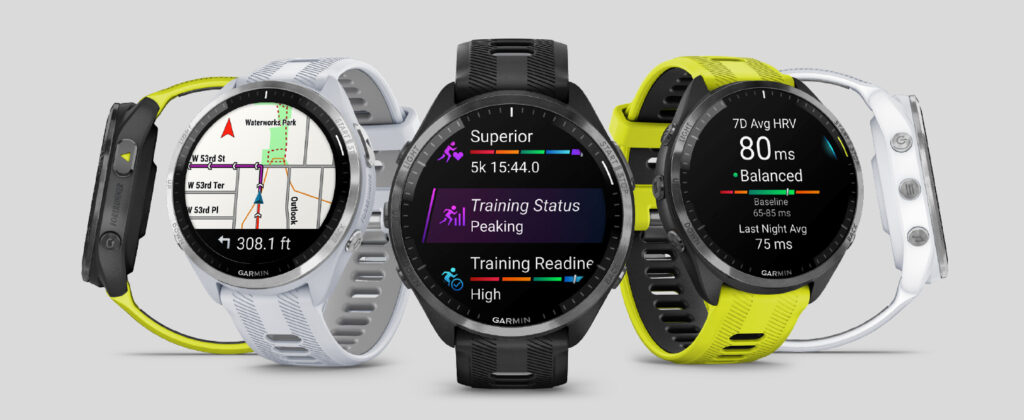
- Training Readiness: A single, easy-to-read score based on sleep quality, recent training load, recovery time, and HRV (Heart Rate Variability). A high score means you’re ready for a hard effort; a low score means you should rest. (Available on FR 965 and 265).
- HRV Status: Measures the variation in the time between heartbeats during sleep. This is a key indicator of your body’s stress and recovery state, providing a deeper layer of insight into your readiness to train.
Conclusion & Final Steps
Choosing the right watch is the first step in unlocking your running potential. Whether you opt for the premium data of The Uncompromised Best (965) or the sheer value of The Perfect First GPS Watch (55), a Forerunner is the reliable tool you need to guide your training. Don’t let indecision slow your progress. Ready to upgrade your run? See Today’s Best Amazon Deals for Every Forerunner Model.
Pingback: Want to take your performance further? See how the 2 best Polar Pacer Running Watches compare. - Ramzisportstech